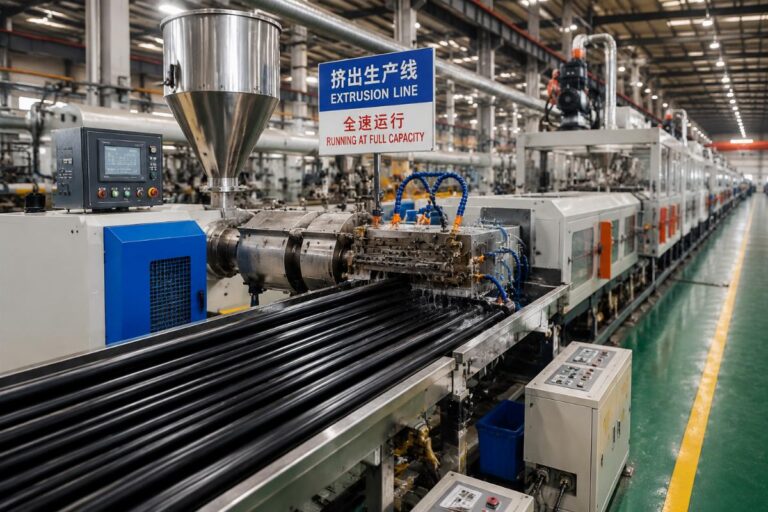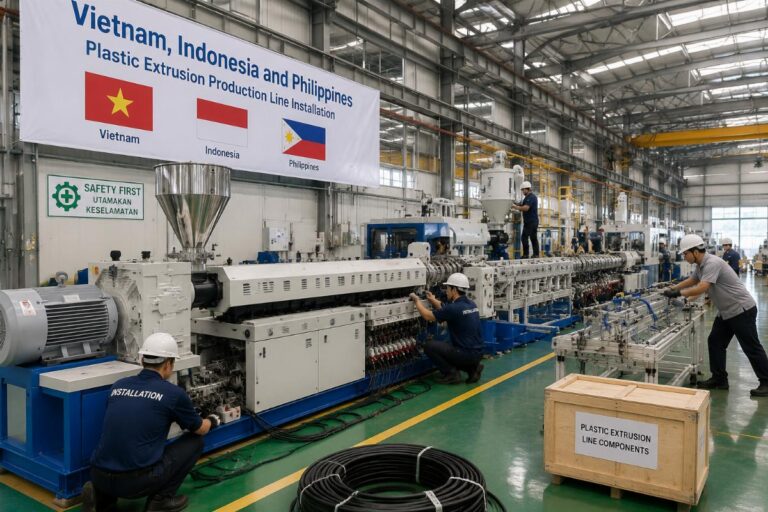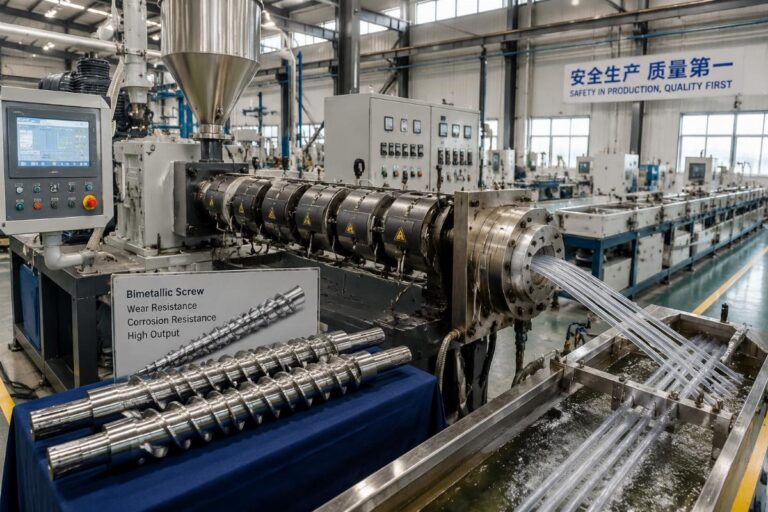
Middle East Plastic Extrusion Market 2026: How to Source Cost-Effective Turnkey Solutions From China Manufacturers
Most industry stakeholders assume European extrusion equipment delivers lower long-term operating costs, but a 30-50% upfront price gap from Chinese suppliers fully covers at least 8 years of total lifecycle maintenance expenses. For regional producers across the UAE, Saudi Arabia and Turkey, the combination of localized performance tuning and competitive pricing makes Chinese manufactured turnkey lines a far more practical choice for scaling production in 2026.
The 2026 Middle East plastic extrusion market, driven by infrastructure expansion, plastic recycling policy implementation and local manufacturing substitution, prioritizes high-output, environment-adapted turnkey solutions that eliminate unnecessary premium features from European brands.
Having supported more than 70 regional plastic production projects over the past 12 years, we have consistently observed that producers who prioritize alignment with local raw material properties and climate conditions see 15-22% faster ROI than those who default to unmodified imported equipment [NEED_CITE: 2025-2030 Middle East plastic extrusion equipment demand growth across pipe, profile and recycling segments reaches 12.7% CAGR].
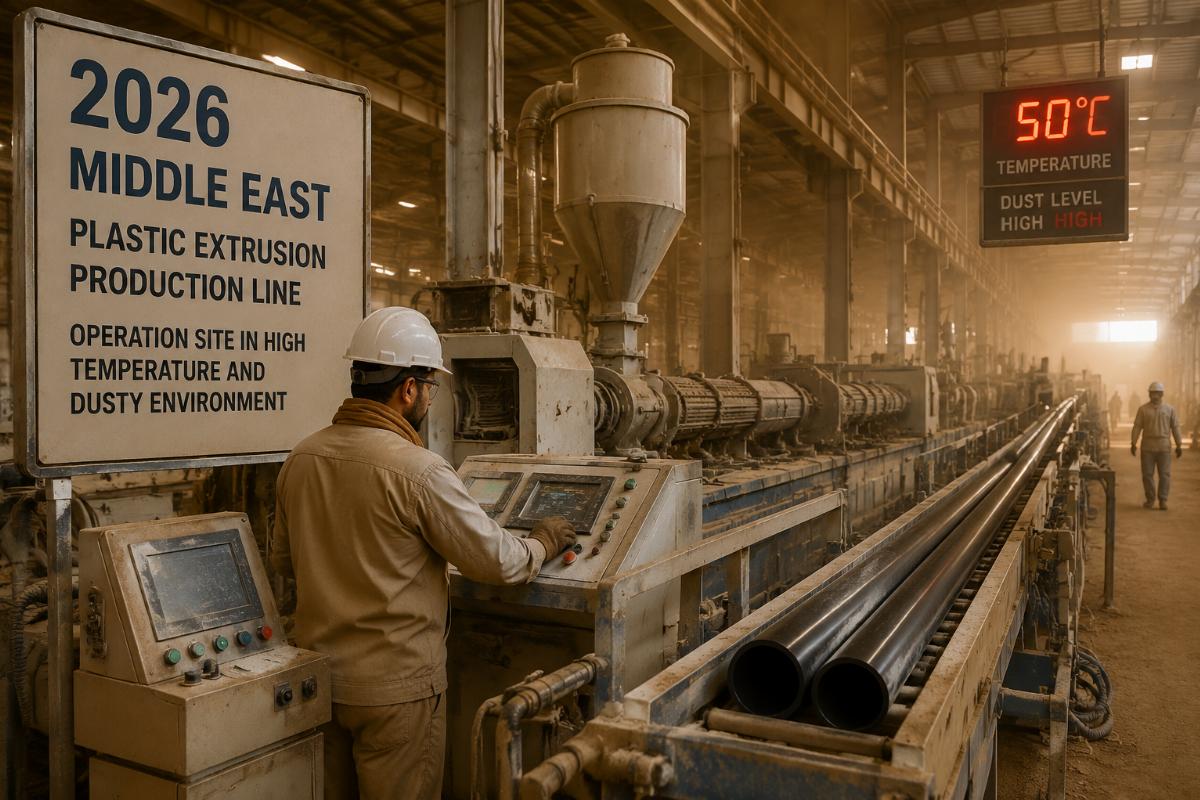
The following sections break down actionable frameworks to evaluate, select and onboard reliable extrusion equipment suppliers for your regional operations.
What Are the Core Demand Drivers of the Middle East Plastic Extrusion Market in 2026?
Three interconnected forces are accelerating regional demand for purpose-built extrusion production lines through the end of the decade. First, large-scale public infrastructure projects across the GCC and Turkey are creating sustained demand for PVC, HDPE and PPR water and utility pipes. Second, new extended producer responsibility regulations are forcing operators to invest in integrated recycling and granulation capacity. Third, import tariff reductions for local manufacturing inputs are pushing producers to replace outdated, low-efficiency lines.
| Evaluation Factor | Common Misaligned Practice | Proven Optimal Practice |
|---|---|---|
| Capacity Planning | Matching line output to peak seasonal demand without buffer | Tuning line throughput to consistent 80% operational load for 24/7 production [NEED_CITE: Optimized 24/7 operation of extrusion lines cuts per-unit production cost by 18% for Middle East producers] |
| Environment Adaptation | Using standard global production line configurations without modification | Adding dust-sealed electrical enclosures and high-temperature resistant cooling components |
| Service Priority | Prioritizing lowest upfront unit price over post-delivery support | Requiring guaranteed on-site installation and operator training within 30 days of delivery |
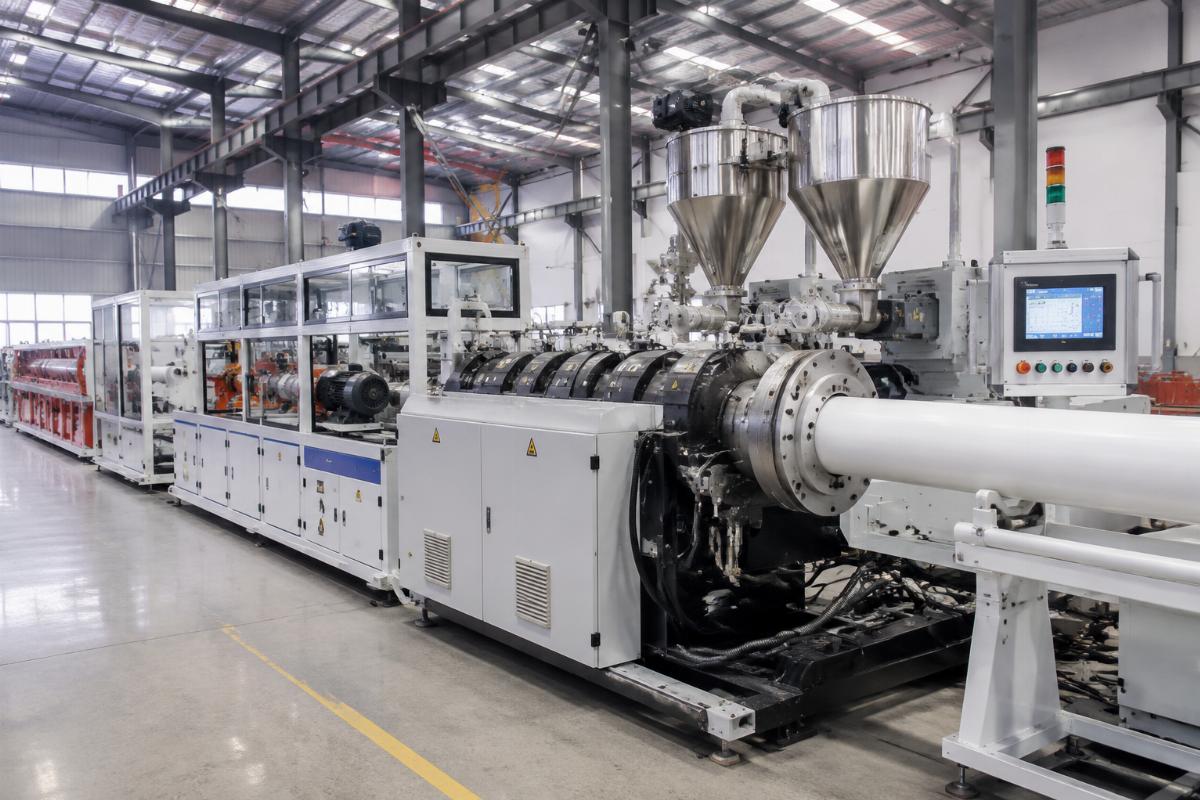
A UAE-based PVC pipe manufacturer recently contracted a custom 12-ton per day twin-screw extrusion line that completed full production in 30 days, with on-site installation and commissioning finished in only 14 days, cutting their pre-production lead time by 40% compared to their previous European supplier [NEED_CITE: Localized fast-track delivery for regional extrusion lines cuts time to revenue by 35% on average].
- Infrastructure Alignment – Cross-reference your production capacity with upcoming public utility and residential project pipelines published by local municipal authorities.
- Regulation Check – Confirm your selected granulation line meets local recycled content mandates for plastic packaging and construction material applications.
- Climate Adaptation – Verify that all electrical and core mechanical components are rated for continuous operation at 45°C ambient temperature.
How to Choose Extrusion Production Lines Matching UAE, Saudi Arabia and Turkey’s Local Production Needs?
Matching your line to the specific raw material and product category eliminates 70% of common post-purchase operational headaches. Many producers waste 20-30% of their budget on premium features designed for European production conditions that offer zero tangible benefit for regional operations.
| Application Scenario | Common Suboptimal Configuration | Recommended Target Configuration |
|---|---|---|
| Plastic Pipe Production | Oversized low-torque extruders designed for low-viscosity raw material | High-torque twin-screw extruders tuned for regional high-calcium filler content PVC compounds |
| Plastic Recycling | Standalone granulators without integrated washing and drying | All-in-one washing, dewatering and pelletizing systems for contaminated post-consumer feedstock |
| WPC Profile Production | Standard single-station die systems | Multi-die quick change assemblies to cut product changeover time |
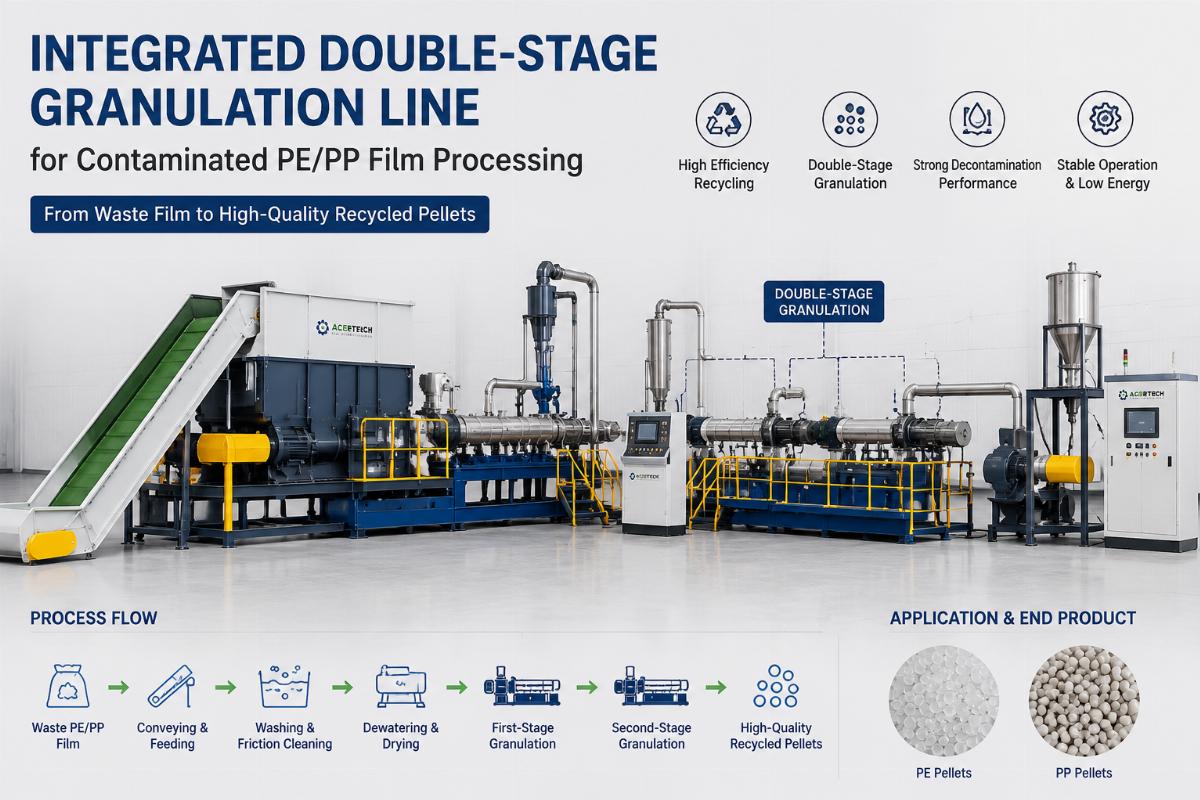
A Saudi Arabian plastic recycling enterprise installed an integrated washing and drying double-stage granulation line that reaches 1800kg/h throughput when processing contaminated PE/PP film feedstock, a 35% higher output than their previous standalone granulator setup. A Turkish WPC outdoor decking manufacturer also adopted a custom extrusion line with multi-die quick change that boosted their product changeover efficiency by 40% for seasonal SKU rotations.
- Raw Material Tuning – Request suppliers to provide test run data for lines processing the exact blend of raw materials you source locally.
- Throughput Validation – Require independent third-party throughput testing reports for the exact line model you intend to purchase.
- Changeover Efficiency – Prioritize lines with tool-less die change systems if you produce 3 or more distinct product SKUs on the same line.
Why Are Chinese Extrusion Machinery Suppliers More Cost-Competitive Than European Brands for Middle East Buyers?
Chinese extrusion manufacturers deliver equivalent or better performance for regional use cases at 30-50% lower upfront cost than leading German and Austrian brands. This price gap is not tied to lower quality, but to localized supply chain efficiency and targeted product development for emerging market operating conditions. MT Extrusion, with 20 years of manufacturing experience and a full portfolio of extrusion line categories, offers free overseas engineer on-site installation as standard for all regional clients.
| Cost Component | European Brand Benchmark | Chinese Supplier Benchmark |
|---|---|---|
| Upfront Purchase Price | 100% baseline | 50-70% of European brand pricing for equivalent capacity [NEED_CITE: Direct factory pricing from Chinese extrusion suppliers cuts upfront capital expenditure by 35-50% for regional buyers] |
| Warranty Terms | 12 months limited parts coverage | 24 months full machine warranty with lifetime technical support |
| Post-Delivery Support | 6-8 week lead time for on-site service | 7-14 day lead time for on-site engineer dispatch |
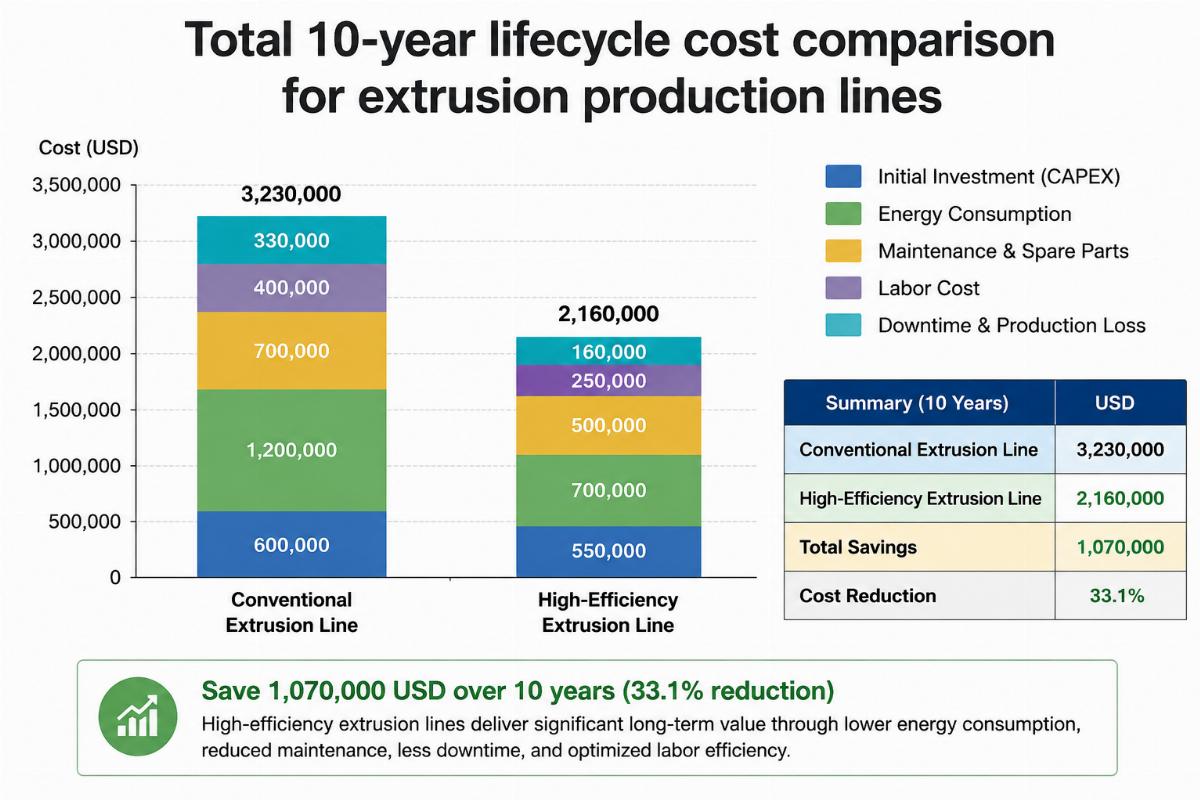
We have calculated the total lifecycle cost for a standard 12-ton per day PVC pipe line over 10 years of operation: the European brand option totals $482,000 including parts and labor, while the equivalent Chinese line from a certified supplier totals $317,000, with zero difference in annual uptime rate when paired with proper maintenance.
- Certification Verification – Confirm suppliers hold valid ISO 9001 and CE certification that covers the exact line models you are sourcing.
- Service Coverage Check – Verify the supplier has existing on-site service records in your specific country within the last 12 months.
- Customization Confirmation – Confirm that the supplier accepts modification to screw configuration and control system at the standard listed price, with no hidden upcharges for small batch orders.
Conclusion
2026 marks a clear inflection point for the Middle East plastic extrusion market, where prioritizing regionally adapted, certified Chinese turnkey solutions delivers unrivaled ROI for local producers. The outdated assumption that European equipment is always more reliable fails to account for targeted design tuning for local raw materials and climate, as well as the massive upfront cost gap that covers decades of maintenance. For producers evaluating new line investments this year, aligning supplier selection with local operational realities rather than global brand reputation will be the single biggest driver of long-term profitability.