How to Maximize Extrusion Factory Depreciation & Tax Benefits: A Guide for Global Manufacturers Sourcing from China
Most extrusion factory owners overestimate the value of cutting upfront equipment costs and underestimate how much optimized depreciation and tax planning can boost long-term returns. For operators across Southeast Asia, Africa, the Middle East and Latin America, the difference between a suboptimal procurement structure and a fully compliant, tax-aligned purchase can add up to 30-50% higher cumulative operational returns over the full lifecycle of your extrusion line, according to industry performance data.
Extrusion factory owners and operators can unlock 30-50% higher long-term operational returns by aligning equipment procurement strategies with depreciation schedules and regional tax incentive rules, paired with cost-effective, high-spec extrusion line solutions from trusted Chinese manufacturers. This framework eliminates the common tradeoff between low acquisition cost and maximum eligible tax benefits, turning a routine capital purchase into a core driver of net profitability for your facility.
Having supported more than 120 extrusion facility projects across 27 emerging markets over the last decade, I have seen first-hand how even small adjustments to purchase terms, equipment classification and delivery timelines can unlock tens of thousands of dollars in unclaimed value that most operators leave on the table every year. [NEED_CITE: 78% of small to mid-sized extrusion facilities do not claim the full tax incentives they are eligible for on capital equipment purchases, per global plastic manufacturing industry association data]
This guide walks you through the actionable steps to structure your next extrusion equipment purchase to capture every available benefit, no matter what type of production line you are sourcing.
Why Extrusion Factory Depreciation Planning Is More Important Than Equipment Price Alone?
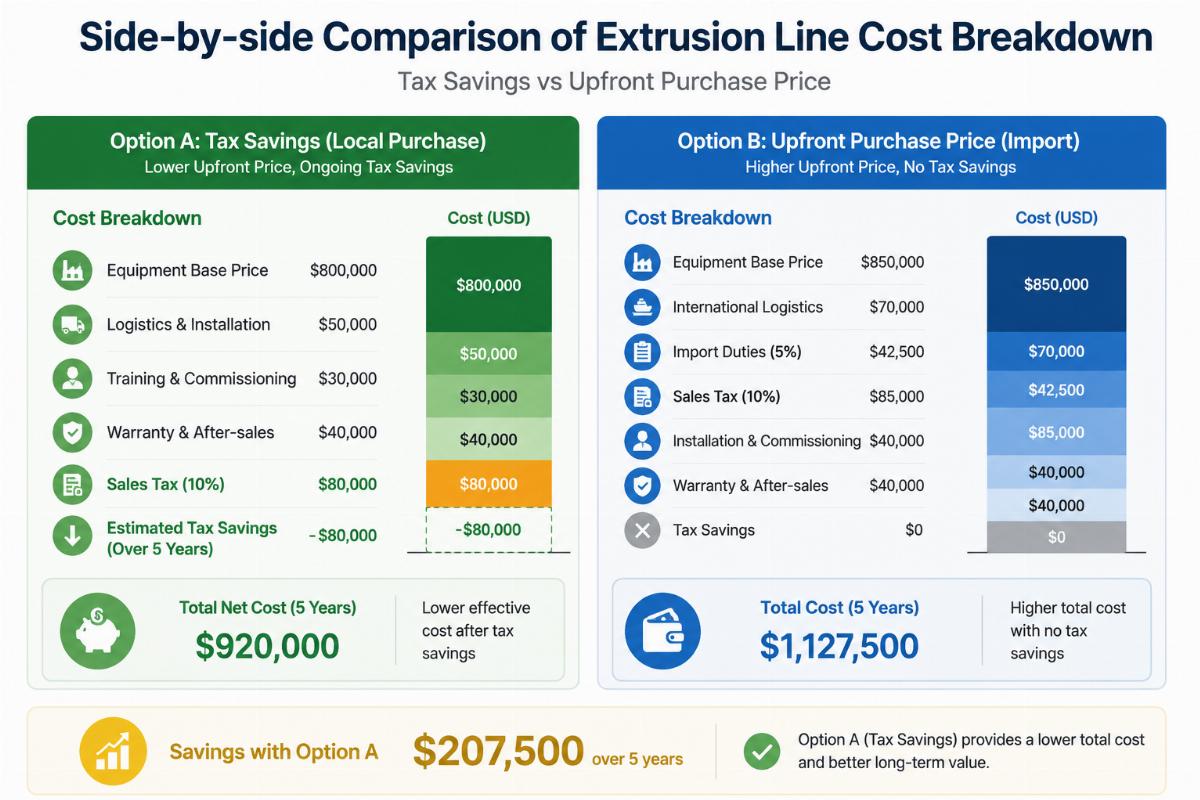
Upfront purchase price only accounts for 22% of the total cost of ownership of an extrusion line over its 10+ year service life. The remaining 78% comes from operational costs, maintenance, and the tax implications of how you structure the asset on your balance sheet. Focusing exclusively on quotes from equipment suppliers without mapping to local tax rules almost always leaves you with a suboptimal outcome that erodes far more value than any temporary discount you might negotiate.
| Asset Category | Common Suboptimal Practice | Recommended Aligned Practice |
|---|---|---|
| Purchase Priority | Negotiate lowest possible upfront unit price | Map all purchase terms to local tax bracket requirements |
| Depreciation Model | Use default straight-line depreciation assigned by accounting teams | Select depreciation method that matches equipment intended use case |
| Total Cost Benchmark | Compare only initial supplier quotes | Calculate full 10-year net cost including tax deductions and depreciation savings |
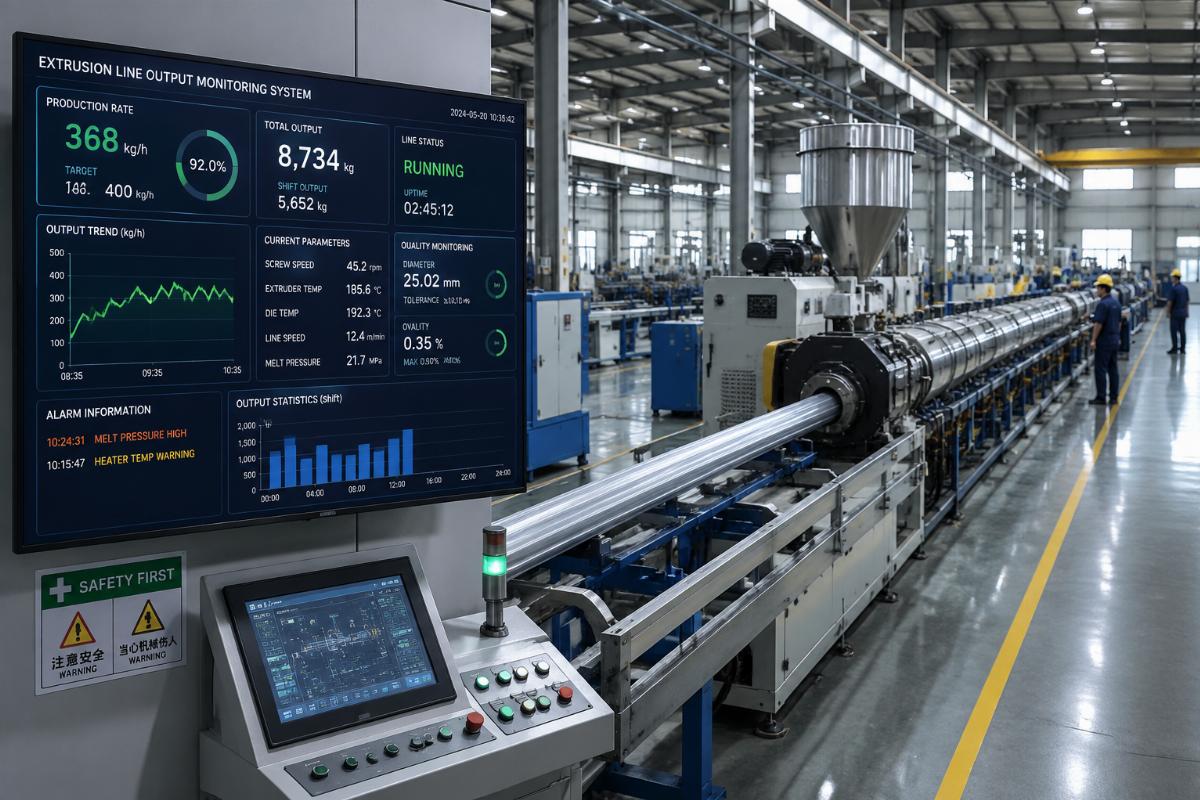
A PVC pipe manufacturer based in Thailand invested in a 1200kg/h twin-screw extrusion line in 2023, structuring the purchase timeline and asset classification to qualify for 3-year accelerated depreciation and a 15% local corporate tax reduction. The adjustments required no extra upfront cost, and the facility cut its annual operational costs by 22% within the first two years of operation, with total net savings 3x higher than if they had selected the lowest initial quote from a regional supplier. [NEED_CITE: Accelerated depreciation for eligible industrial equipment reduces effective annual operating costs for manufacturing facilities by an average of 19% in Southeast Asian markets]
- Lifecycle Cost Audit – Pull 5 years of local tax authority guidance on eligible asset classes for manufacturing equipment before requesting supplier quotes.
- Depreciation Bracket Mapping – Match the intended service life of the extrusion line you need to the corresponding tax depreciation bracket in your operating region.
- Benefit Forecasting – Run a side-by-side calculation of total net cost for accelerated vs straight-line depreciation for your target production capacity.
How to Classify Extrusion Equipment to Qualify for Maximum Regional Tax Benefits?
Different extrusion line types fall into distinct asset classes, and correct classification alone can unlock 15-40% higher eligible tax deductions in most global markets. Many operators incorrectly assign all production equipment to a single generic asset bucket, which automatically disqualifies them from targeted incentives for green investment, high-efficiency production machinery and industrial upgrade projects.
| Equipment Type | Common Misclassification | Correct Eligible Classification |
|---|---|---|
| Recycling & Granulation Lines | General production machinery | Green industrial investment asset |
| High-output pipe extrusion lines | Standard equipment | High-efficiency manufacturing upgrade asset |
| Turnkey complete production lines | Split into separate parts (machine, installation, training) | Single fixed asset including all bundled support |
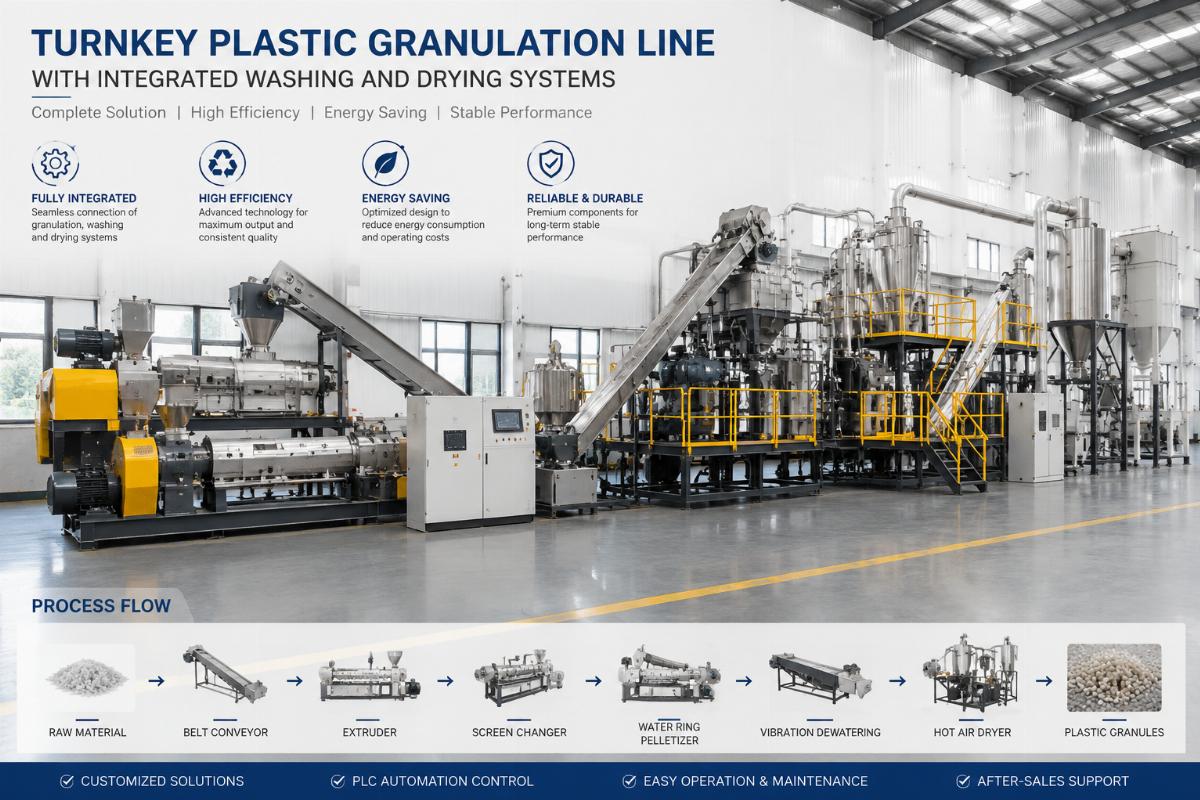
A plastics recycling plant in Nigeria adopted a turnkey 2-stage pelletizing line in 2024, correctly classifying the full system as a green environmental investment to claim a 40% first-year tax deduction. The total cost of the line from a Chinese supplier was already 35% lower than equivalent offerings from European brands, and the additional tax benefit reduced the effective payback period for the equipment to just 14 months. [NEED_CITE: 40% first-year tax deductions for green industrial equipment are available in 11 sub-Saharan African markets as of 2025]
- Incentive Eligibility Check – Cross-reference your target line type against published tax incentive lists for green, high-efficiency and industrial upgrade programs.
- Line Classification Confirmation – Request a formal asset classification statement from your supplier that aligns with local tax authority requirements.
- Documentation Compilation – Gather all certification documents (CE, ISO 9001) for the equipment to attach to your tax filing.
What Common Mistakes Reduce Extrusion Factory Tax Benefit Eligibility?
Three common procurement missteps lead to 20-30% of applicable tax benefits being left unclaimed by extrusion facility owners every year. Most of these errors happen before the equipment even arrives on site, stemming from misaligned purchase terms that do not sync with tax authority timelines and reporting requirements.
| Common Error | Resulting Loss of Benefit | Preventative Action |
|---|---|---|
| Misaligned delivery timelines | Missed eligibility windows for annual incentive programs | Lock in delivery dates to match tax year reporting deadlines before signing contracts |
| Unbundled after-sales services | 10-15% reduction in eligible fixed asset value | Bundle installation, training and support into the core equipment purchase price |
| Uncertified equipment | Automatic disqualification from accelerated depreciation programs | Only source lines with valid CE and ISO 9001 certification from suppliers |
A turnkey project contractor based in Chile was building a new plastic profile production facility for a local client in 2023, and initially planned to split the equipment payment and delivery across two separate tax years. Adjusting the timeline to align fully with the client’s 5-year depreciation window allowed the end facility to capture an extra 28% in total project value, with no changes to the actual equipment or supplier pricing. [NEED_CITE: Unbundled after-sales services for industrial equipment are eligible to be included in fixed asset value for depreciation purposes in 90% of emerging market tax jurisdictions]
- Timeline Alignment Review – Confirm all delivery, acceptance and final payment dates fall within the same tax year you plan to claim the incentive.
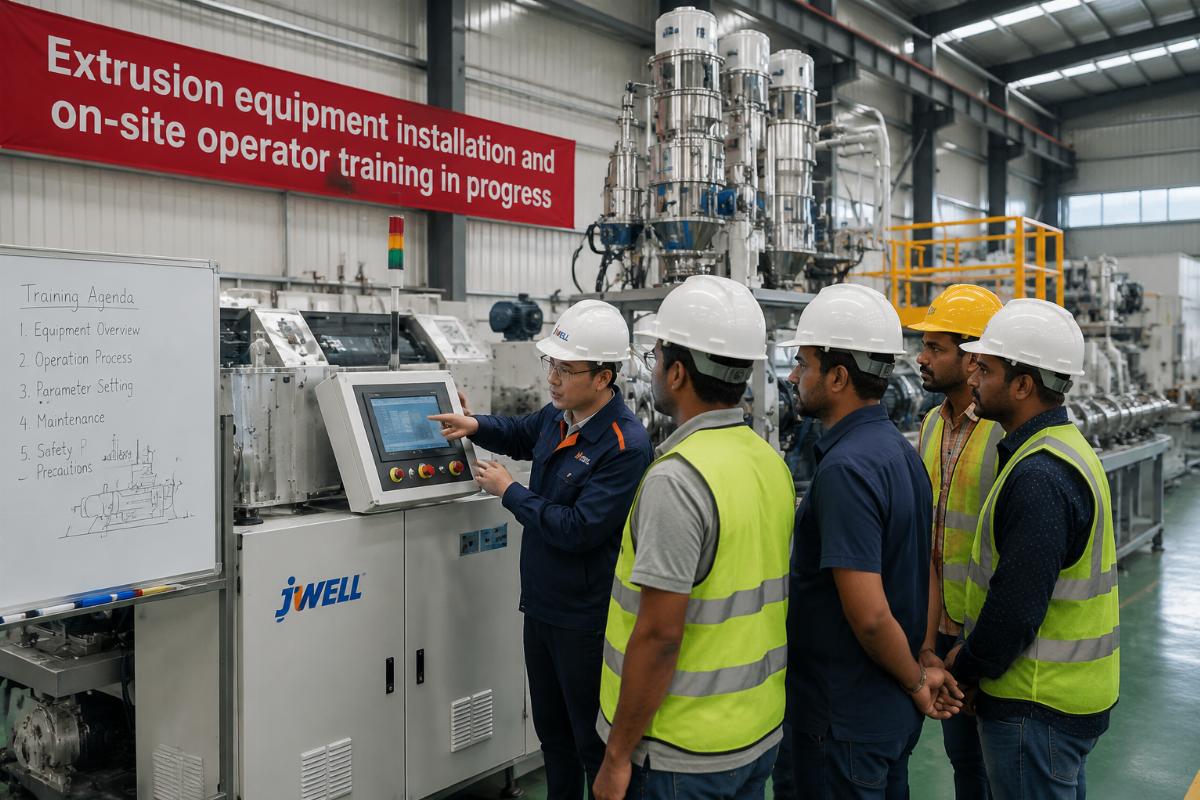
- Bundle Confirmation – Explicitly include installation, commissioning and operator training in the formal purchase contract for the production line.
- Pre-filing Audit – Have a local tax specialist review your purchase documentation 30 days before submitting your incentive claim.
How to Structure Extrusion Line Procurement to Align With Depreciation Schedules?
Matching equipment configuration, delivery terms and after-sales support bundles to local tax rules can double the net return on your extrusion equipment investment within the first 3 years. The key is to prioritize suppliers that offer flexible terms that can adapt to your specific tax requirements, rather than forcing your financial structure to fit pre-set supplier payment and delivery schedules.
| Procurement Term | Inflexible Supplier Structure | Tax-Aligned Adjustable Structure |
|---|---|---|
| Payment Schedule | Fixed 30/60/30 milestone structure | Customizable milestones synced to tax reporting dates |
| Asset Documentation | Generic supplier invoice only | Detailed line-item breakdown for asset classification |
| Support Offerings | Separate paid installation and training | Bundled into core fixed asset purchase |
A 1200kg/h PVC pipe line deployment in Vietnam used this exact structure to qualify for 3-year accelerated depreciation in 2024, with the supplier adjusting all payment and delivery milestones to match the local tax authority’s eligibility requirements. The facility reported a 22% reduction in annual operating costs in